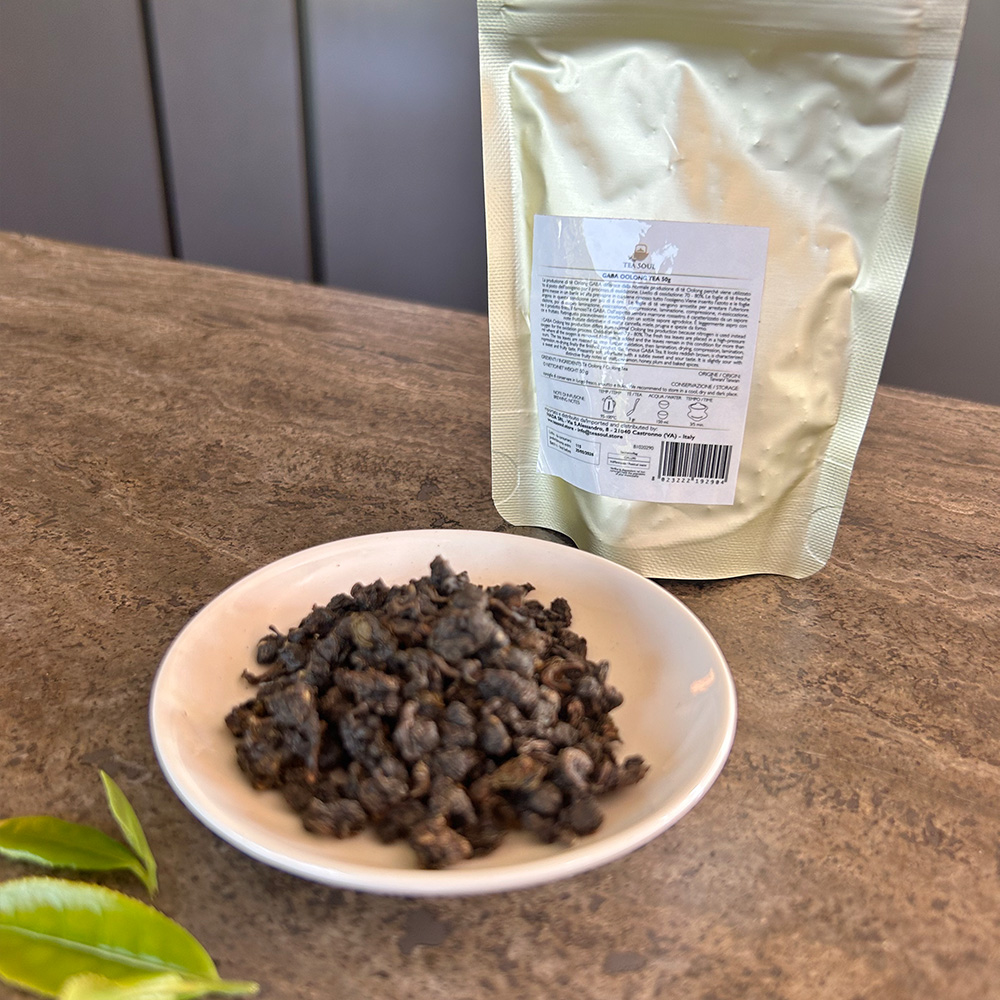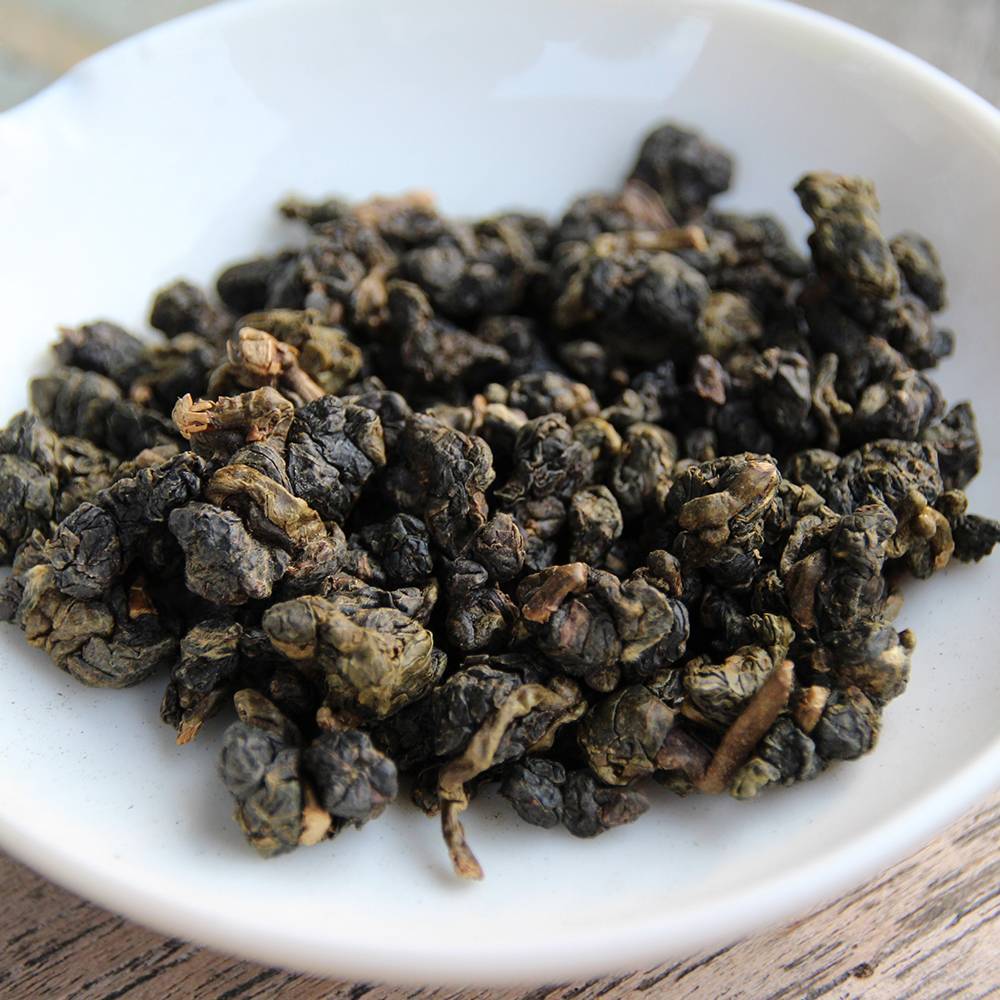
Dong Ding Oolong Tea is a fairly well-known type of Taiwanese oolong that has changed a lot from its beginnings in the 1980s to the present. In fact, when this tea began to conquer the market about forty years ago, it had high oxidation and underwent a very intense cooking process that made the leaf appear dark brown in color like that of a red tea. Nowadays, although coming from the same area in Taiwan around Mount Lugu, this product is usually oxidized and roasted less, as the general taste nowadays prefers a less smoky and tannic character in oolongs. Regarding the flavors of this Dong Ding in our selection, an attempt was made to focus a little more on cooking to achieve a deeper taste. Thus, in particular, during tasting, the woody flavor nuances will be noted and, only in the background, some vegetal notes characterized by a dark, balsamic tone. In comparison with the other Dong Ding in our catalog, this one will have a slight bitterness in the aftertaste due to the cooking that reveals the production approach more akin to that of the past as opposed to the softer, fresher modern style. Dong Ding oolong tea from Taiwan has rather narrow, shiny-surfaced, dark green and army green leaves with tints between light brown and ochre at the stems. Once infused, they give off floral, roasted nutty and slightly herbaceous aromas with a fresh finish. In the cup, the liqueur is straw yellow in color with some pinkish reflections. After harvesting, the leaves wither in the sun for a few hours before resting on bamboo trays under cover. Here is where the oxidation starts thanks to a manipulation of the leaves, the shaking, made by the tea master. Having reached the desired oxidation, by about 40 percent, the tea moves to the next stage where the leaves go into a charcoal-heated kiln to block enzyme activity and fix the product's characteristics. After this stage in the oven, the leaf is given its final shape by rolling it up by hand so that its aromas can be better preserved. The product can now be roasted several times to change its flavor profile, and once dried, it will be able to keep its rolled shape fixed and eventually be ready for consumption.
Prezzo IVA inclusa
Dong Ding Oolong Tea is a fairly well-known type of Taiwanese oolong that has changed a lot from its beginnings in the 1980s to the present. In fact, when this tea began to conquer the market about forty years ago, it had high oxidation and underwent a very intense cooking process that made the leaf appear dark brown in color like that of a red tea. Nowadays, although coming from the same area in Taiwan around Mount Lugu, this product is usually oxidized and roasted less, as the general taste nowadays prefers a less smoky and tannic character in oolongs. Regarding the flavors of this Dong Ding in our selection, an attempt was made to focus a little more on cooking to achieve a deeper taste. Thus, in particular, during tasting, the woody flavor nuances will be noted and, only in the background, some vegetal notes characterized by a dark, balsamic tone. In comparison with the other Dong Ding in our catalog, this one will have a slight bitterness in the aftertaste due to the cooking that reveals the production approach more akin to that of the past as opposed to the softer, fresher modern style. Dong Ding oolong tea from Taiwan has rather narrow, shiny-surfaced, dark green and army green leaves with tints between light brown and ochre at the stems. Once infused, they give off floral, roasted nutty and slightly herbaceous aromas with a fresh finish. In the cup, the liqueur is straw yellow in color with some pinkish reflections. After harvesting, the leaves wither in the sun for a few hours before resting on bamboo trays under cover. Here is where the oxidation starts thanks to a manipulation of the leaves, the shaking, made by the tea master. Having reached the desired oxidation, by about 40 percent, the tea moves to the next stage where the leaves go into a charcoal-heated kiln to block enzyme activity and fix the product's characteristics. After this stage in the oven, the leaf is given its final shape by rolling it up by hand so that its aromas can be better preserved. The product can now be roasted several times to change its flavor profile, and once dried, it will be able to keep its rolled shape fixed and eventually be ready for consumption.
Ogni prodotto disponibile sulla piattaforma è pubblicato e venduto da un venditore partner indicato nella scheda prodotto. La piattaforma funge da metasearch/marketplace: facilita scoperta e checkout, ma la vendita viene effettuata dal venditore, che diventa titolare della transazione.
La spedizione è gestita direttamente dal venditore partner. Il pacco parte dal magazzino del venditore, o dalla sua rete logistica, e viene affidato al corriere. Questo modello consente consegne più efficienti e garantisce che la gestione dell'ordine sia in carico a chi ha disponibilità reale del prodotto.
Nella scheda prodotto trovi ingredienti, allergeni e informazioni nutrizionali secondo i dati forniti dal venditore o produttore, cioè l'etichetta ufficiale. Se hai allergie o intolleranze, ti consigliamo di verificare attentamente la scheda prima dell'acquisto e contattare il venditore per dubbi specifici.
La piattaforma nasce per valorizzare e rendere più accessibile il Made in Italy alimentare. Selezioniamo venditori del settore e-commerce food con cataloghi coerenti e informazioni trasparenti. Ogni prodotto è associato a un venditore identificabile e a una scheda informativa completa: vogliamo che acquistare qui significhi comprare con fiducia.
Tempi e costi di consegna dipendono dal venditore e dalla destinazione. In checkout trovi sempre la stima della consegna aggiornata prima di confermare il pagamento. Per spedizioni internazionali, i tempi possono variare a seconda del paese e del corriere.