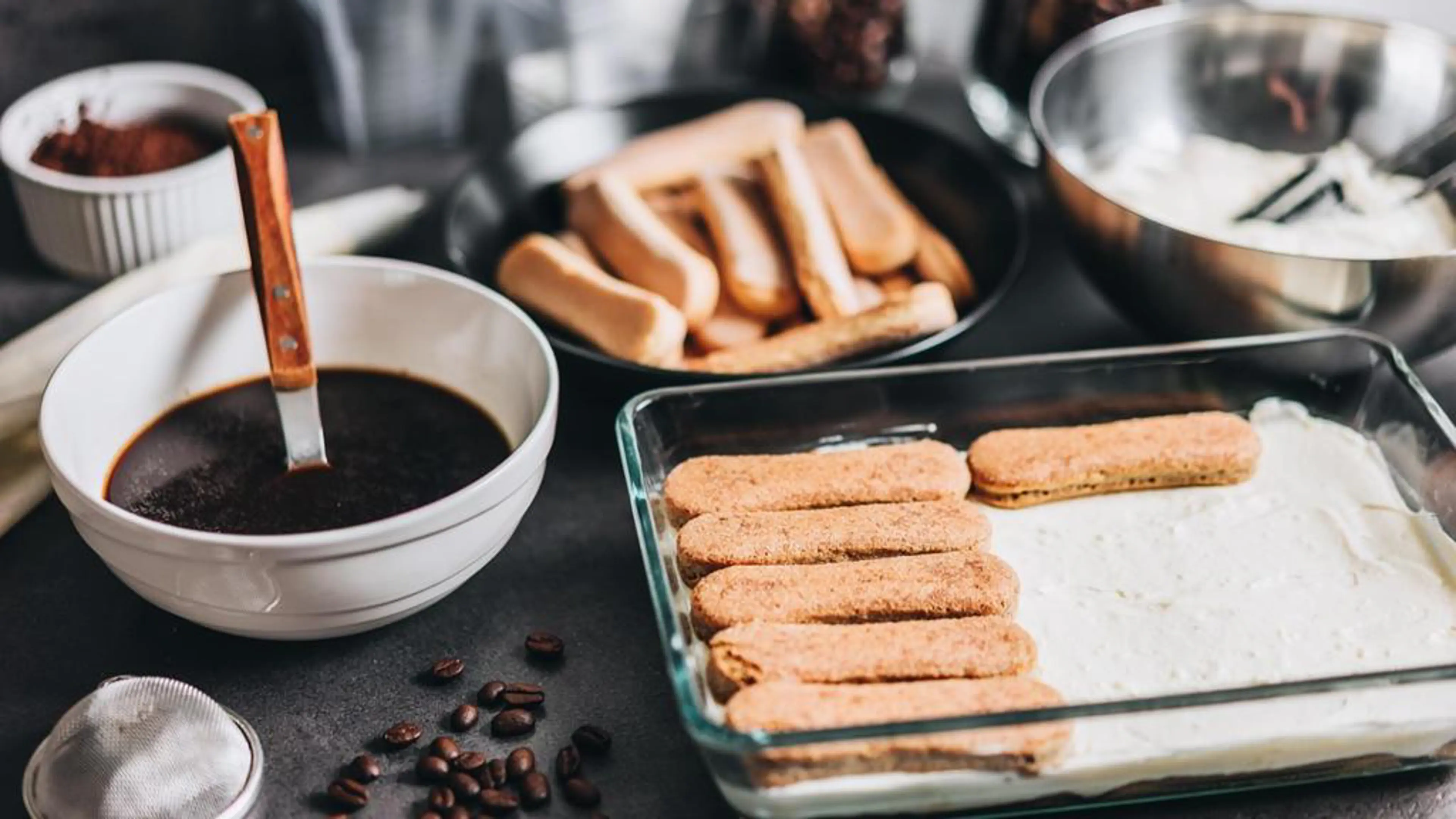
Tiramisu, one of the world’s most beloved Italian desserts, has entered the collective imagination as a symbol of indulgence and conviviality. Its origins date back to the 1960s–70s in northern Italy, with an ongoing dispute among several regions claiming its paternity: some speak of a “restorative dessert” served to the courtesans of Treviso, others link it to Venetian taverns, while others see traces of it as far back as the Renaissance Medici courts, in the form of a rich cream made with eggs and sugar (source: L. Fasano, Il dolce sospetto: storia e misteri del tiramisù, Feltrinelli, 2018). What is certain is that, thanks to its simplicity and the pleasant alternation of textures (soaked ladyfingers, soft mascarpone cream and cocoa powder), tiramisu has won the palates of millions of people in every country.
The choice of coffee for making tiramisu is at the centre of lively debate: espresso or moka? Espresso, brewed by pressure machines at 9 bar (unit of measurement), guarantees a more intense flavour, a golden crema and an optimal temperature, ideal for not “switching off” the mascarpone cream. Moka coffee, typical of Italian home tradition, is denser and fuller-bodied, but often more bitter and less aromatic when prepared in old coffee makers with worn metal parts (source: A. Rizzi, “Espresso vs moka: la scienza del caffè,” Caffè Italiano Magazine, 12/2020). Many professional pastry chefs now prefer espresso for the liquid’s uniform consistency and the possibility of precise dosing when soaking the ladyfingers, while many home enthusiasts continue to use moka for convenience and for that slight nostalgic note recalling the traditional, usually Sunday, family meal.
Technically, espresso water is delivered at around 90–95 degrees Celsius and undergoes a short extraction of approximately 25–30 seconds: this process preserves the more volatile aromas, limiting the extraction of bitter components (source: S. Conti et al., “Influenza della temperatura e del tempo di estrazione sul profilo aromatico del caffè,” Journal of Coffee Research, vol. 7, 2022). Moka, on the other hand, uses a slightly higher temperature and longer contact time, extracting phenolic compounds responsible for a sharper flavour. So, if your palate loves dark-chocolate aromas and pronounced roasted notes, moka can provide them, but for a balance between mascarpone’s sweetness and a calibrated bitter aftertaste, espresso remains the preferred method.
In addition to the coffee, “real tiramisu” is characterised by the careful selection of a few other quality ingredients: very fresh eggs (usually only the yolks, to ensure creaminess and stability), granulated sugar, Italian mascarpone with at least 60% fat, artisanal ladyfingers and a final dusting of unsweetened cocoa powder. Some master pastry chefs add a dash of liqueur—Marsala, rum or brandy—to the soaking liquid, or chocolate chips between the layers for a touch of crunch.
Like every dessert or dish that has become famous, tiramisu has developed into a thousand variations over the last few decades: berries, pistachio, white chocolate and matcha tea, as well as vegan versions with soy cream and alternative “eggs”. After all, as the name of this delicacy suggests (“tirami su”, meaning “lift me up” or “cheer me up”), the goal is to give yourself a small moment of carefree pleasure, which can taste different for everyone: what matters is that it works!
From tiramisu brownies, combining Italian and American culture, to protein and low-fat tiramisu for those seeking a functional version, including gluten-free and pistachio varieties: indulge yourselves and choose the perfect one from our 27 different recipes to lift your spirits 😊
