Each product available on the platform is listed and sold by a partner seller identified on the product page. The platform acts as a metasearch/marketplace: it facilitates discovery and checkout, but the sale is made by the seller, who becomes responsible for the transaction.
Shipping is managed directly by the partner seller. The package is sent from the seller's warehouse or logistics network and handed over to the courier. This model enables more efficient deliveries and ensures that order management is handled by the party with actual availability of the product.
On the product page, you will find ingredients, allergens and nutritional information based on the data provided by the seller or producer, namely the official label. If you have allergies or intolerances, we recommend carefully checking the product page before purchasing and contacting the seller with any specific questions.
The platform was created to promote Italian food and make it more accessible. We select sellers in the food e-commerce sector with consistent catalogs and transparent information. Each product is associated with an identifiable seller and a complete information page: we want shopping here to mean buying with confidence.
Delivery times and costs depend on the seller and destination. At checkout, you will always find an updated delivery estimate before confirming payment. For international shipments, times may vary depending on the country and courier.
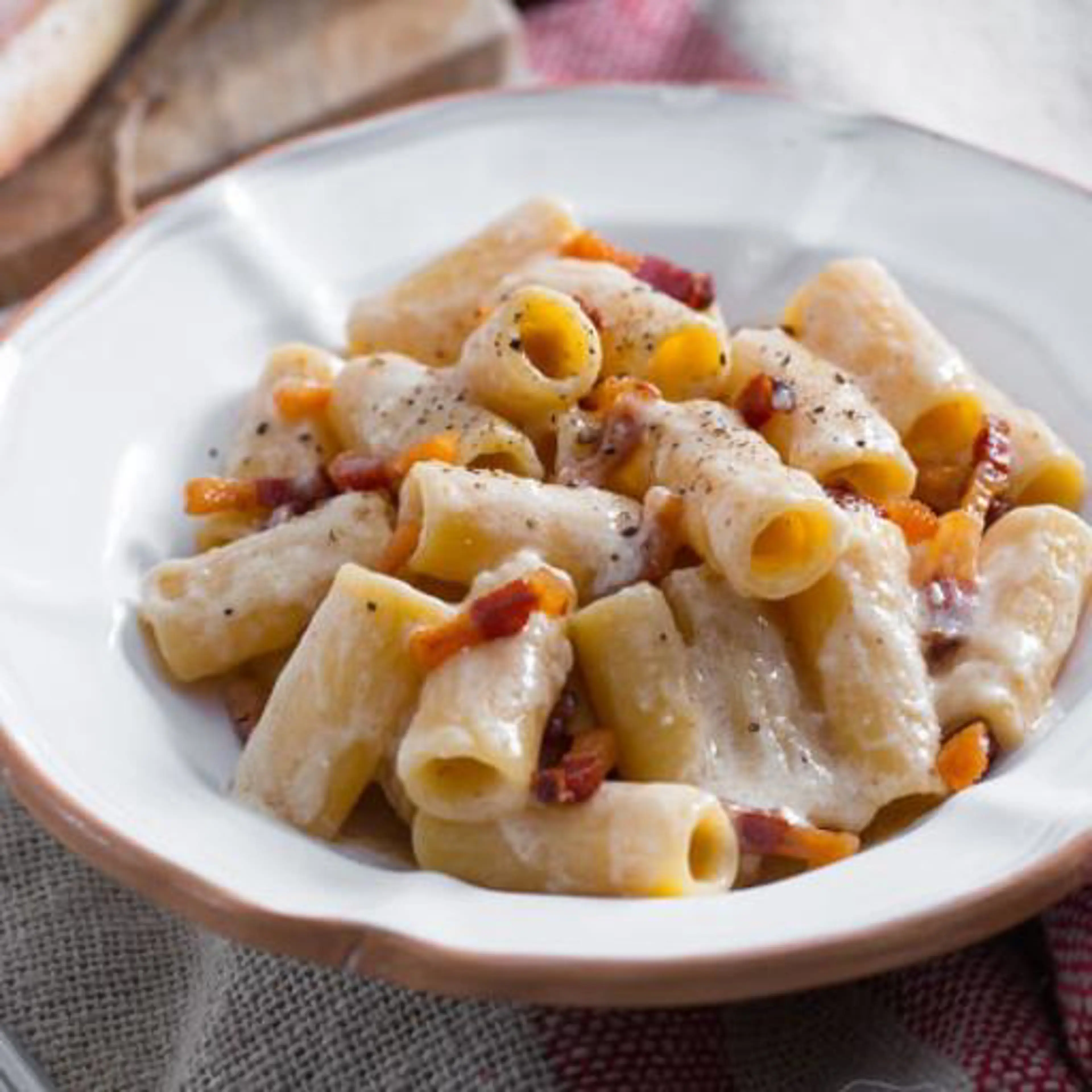
Pasta alla gricia is considered the ancestor of amatriciana, sharing the use of guanciale and Pecorino Romano. Unlike the original amatriciana recipe, it does not include tomato sauce as its origin is said to predate its introduction to Europe. It is said that the gricia recipe was invented by Lazio shepherds who, with the few ingredients available, prepared a dish as simple as it was hearty. A perfectly made pasta alla gricia should be creamy and flavorful with only the help of cheese and cooking water: we chose rigatoni to capture this tasty sauce, but a long pasta like bucatini or tonnarelli would also be perfect!








To make pasta alla gricia, first prepare the guanciale: cut it into slices half a cm thick, then remove the rind and cut into strips.
Put a pot of water on the stove to boil and salt it.
Meanwhile, the water for the pasta will have come to a boil, so cook the rigatoni for 2-3 minutes less than the time indicated on the package.
Pour the guanciale into a very hot pan and brown over medium-high heat for about 10 minutes, stirring often to prevent it from burning. Set it aside, leaving the cooking fat in the pan.
Grate the Pecorino with a fine grater and set aside.
Pour a ladle of the pasta cooking water into the pan with the still warm guanciale fat and swirl it to create an emulsion.
Drain the rigatoni into the pan and finish cooking by tossing and stirring often, so that the starch released by the pasta combines with the fat of the sauce to create a creamy texture.
When the pasta is al dente, remove the pan from the heat and sprinkle in the grated Pecorino.
Then immediately dilute with a little hot pasta cooking water, stirring quickly to achieve a fluid and creamy sauce. Finally, add the browned guanciale and give it a final stir.
Plate immediately and finish to taste with ground pepper. Your pasta alla gricia is ready to be enjoyed!
Pan
Pot
Fine grater
It is recommended to consume pasta alla gricia as soon as it is ready. Alternatively, it can be stored in the refrigerator for up to one day.
Italia
| Energy (kcal) | 475.89 |
| Carbohydrates (g) | 36.74 |
| of which sugars (g) | 1.69 |
| Fat (g) | 31.19 |
| of which saturates (g) | 1.8 |
| Protein (g) | 11.58 |
| Fibre (g) | 1.37 |
| Salt (g) | 0.19 |